

Views: 0 Author: Site Editor Publish Time: 2026-10-22 Origin: Site


A practical comparison for OEM engineers, battery pack designers and industrial battery buyers.
The choice between 18650 and 21700 lithium-ion battery cells affects more than runtime. Cell dimensions influence enclosure design; capacity and discharge ratings determine how many cells a pack needs; and cell pricing must be evaluated alongside welding, protection, cooling and assembly costs. This guide explains the differences and shows when each format makes sense for an OEM battery project.
Quick answer: A typical 18650 cell is approximately 18 × 65 mm, while a 21700 cell is approximately 21 × 70 mm. The larger 21700 format often provides more energy per cell and can reduce the number of cells needed for a battery pack. However, neither format is automatically better in discharge performance, energy density or cost; the exact cell model and pack requirements decide.
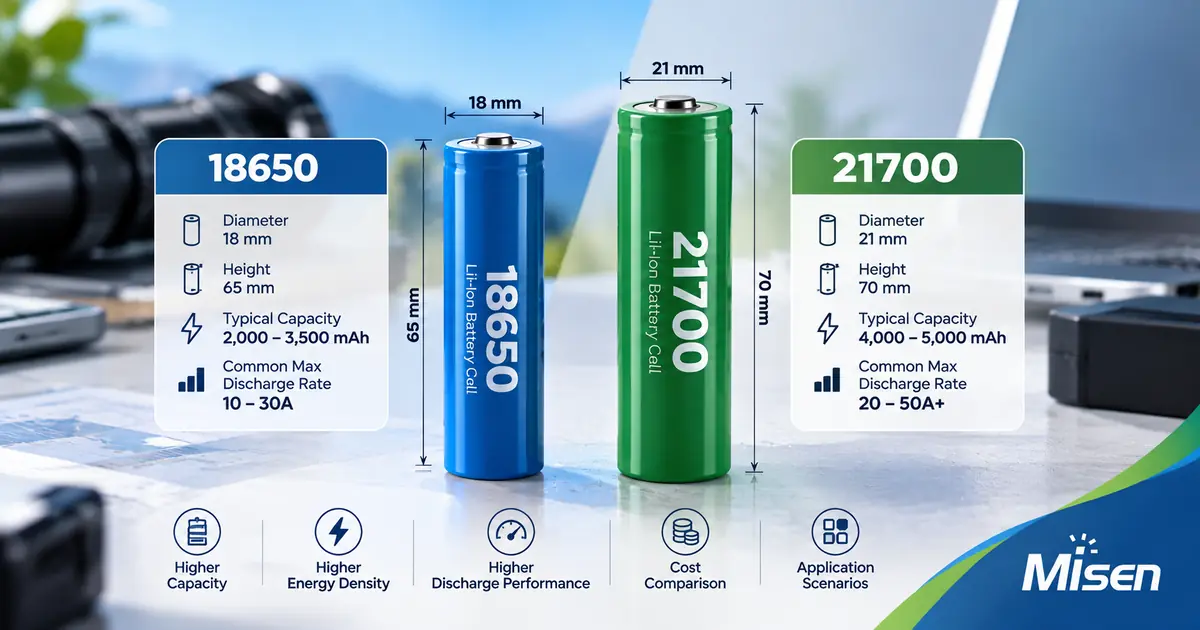
Figure 1. The 21700 format has a larger diameter and a longer body than the 18650 format. Exact dimensions vary by model.
| Comparison | 18650 cell | 21700 cell |
|---|---|---|
| Nominal form factor | 18 mm diameter × 65 mm height | 21 mm diameter × 70 mm height |
| Cell body volume | Baseline (100%) | About 46.6% larger by nominal cylinder geometry |
| Example cell capacities | 2,500 mAh or 3,500 mAh | 4,000 mAh or 5,000 mAh |
| Nominal energy examples | 9.0 Wh or 12.6 Wh at 3.6 V | 14.4 Wh or 18.0 Wh at 3.6 V |
| Discharge current | Model-dependent; high-power 18650 cells exist | Model-dependent; high-power 21700 cells exist |
| Pack design tendency | Useful for compact compartments and legacy designs | Potentially fewer cells and interconnections for equal energy |
| Cost evaluation | Compare USD/cell and USD/Wh | Compare USD/cell and USD/Wh, plus pack assembly |
The capacity and energy figures are illustrative examples, not category minimums, maximums or quotations. Nominal dimensions describe the format; actual product drawings and specified tolerances take priority.
Cylindrical cell names refer to approximate physical dimensions. The 18650 format is roughly 18 mm in diameter and 65 mm long; the 21700 format is roughly 21 mm in diameter and 70 mm long. A 21700 is therefore about 3 mm wider and 5 mm longer in nominal terms.
If both are treated as simple cylinders, volume is calculated as V = π × (diameter / 2)² × height. On this nominal geometric basis, a 21700 cell occupies approximately 1.47 times the volume of an 18650 cell. This extra volume gives manufacturers more room for active materials, but it does not mean capacity, energy or output current must increase by the same percentage.
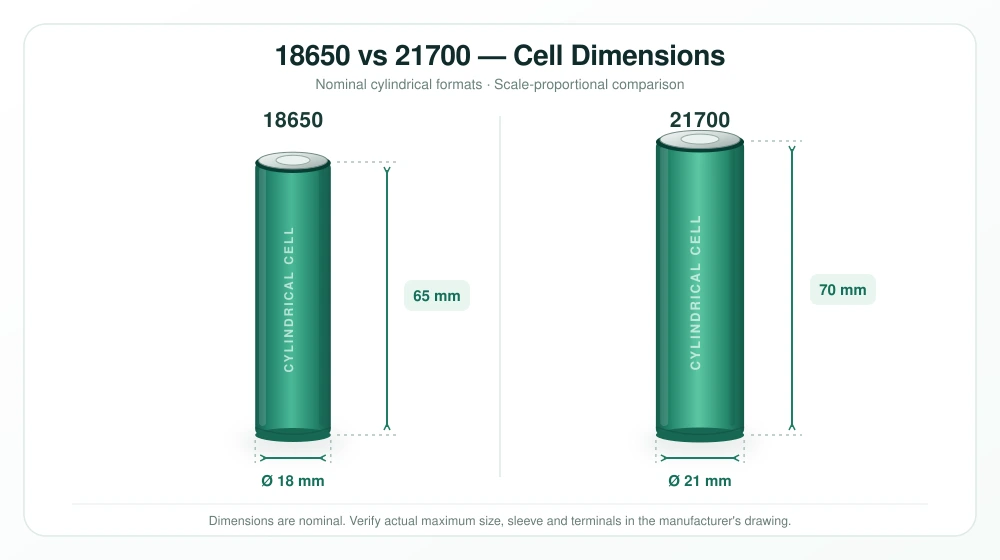
Figure 2. Nominal cylindrical dimensions; check exact maximum diameter, length, sleeve and terminal details in the manufacturer's drawing.
Mechanical fit warning: A 21700 cell is not a drop-in replacement for an 18650 cell. A larger holder, different spacing, welded interconnect design and revised enclosure may be needed. Protected cells, insulating rings and added tabs can also change the installed dimensions.
A larger cell often stores more energy, but capacity in ampere-hours (Ah) is not the same as energy in watt-hours (Wh). When comparing lithium-ion cells of the same nominal voltage, more Ah generally means more nominal energy. For different chemistries or voltage platforms, comparing Wh is more useful.
Nominal energy (Wh) = Nominal voltage (V) × Rated capacity (Ah)
Example: 3.6 V × 3.0 Ah = 10.8 Wh; 3.6 V × 5.0 Ah = 18.0 Wh.
| Illustrative cell | Rated capacity | Energy at 3.6 V |
|---|---|---|
| 18650 example A | 2,500 mAh | 9.0 Wh |
| 18650 example B | 3,500 mAh | 12.6 Wh |
| 21700 example A | 4,000 mAh | 14.4 Wh |
| 21700 example B | 5,000 mAh | 18.0 Wh |
In this particular 3.0 Ah versus 5.0 Ah example, the 21700 cell provides about 66.7% more nominal energy per cell. That percentage comes from the assumed capacities and cannot be applied to every 18650/21700 pairing. Real usable energy depends on discharge current, temperature, voltage cutoff, aging and the operating window set by the battery management system (BMS).
For applications where compact dimensions and established pack designs are important, explore our 18650 lithium-ion battery cells to compare available capacities and discharge ratings.
It is tempting to assume that every 21700 can deliver more current than an 18650. In practice, cell construction and the manufacturer's test conditions matter more than the size label alone. Both formats include energy-focused cells and power-focused cells. A high-energy cell may have a lower permitted continuous current than a lower-capacity high-power design.
A cell's discharge current is expressed in amperes (A), whereas C-rate relates that current to its rated Ah capacity. For example, a 3.0 Ah cell at 5C corresponds to 15 A, while a 5.0 Ah cell at 5C corresponds to 25 A. These are calculations, not permission to discharge a cell at 5C; always use the model's specified current limits.
Current (A) = C-rate × Capacity (Ah)
C-rate = Current (A) / Capacity (Ah)
The Molicel INR-21700-P50B manufacturer's product data sheet lists a typical capacity of 5,000 mAh, nominal voltage of 3.6 V and 60 A continuous discharge with an 80°C temperature cut-off. This demonstrates what a particular high-power 21700 design can achieve under defined conditions; it is not a universal 21700 rating. The high current requires an appropriate thermal and pack design. See the manufacturer's P50B product data sheet for exact conditions.
When selecting a cell for power tools, e-mobility, robotics or equipment with peak loads, check continuous current, pulse current and duration, voltage sag, DC resistance, cell temperature, cooling and cycle-life performance together. For applications requiring higher capacity per cell or demanding power output, browse our high-drain 21700 battery cells and compare high-energy and high-drain models.
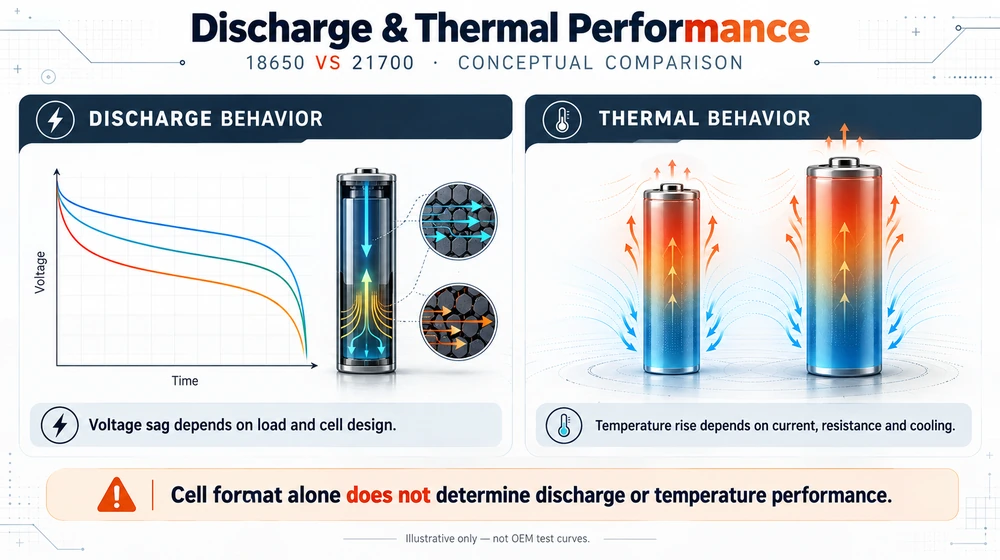
Figure 3. Discharge performance must be compared under consistent test conditions; do not treat pulse current as continuous current.
For battery procurement, 18650 vs 21700 cost should not be decided by unit price alone. A 21700 cell may cost more per piece while delivering more nominal energy. To make a fair first-pass comparison, divide the cell purchase price by its nominal energy in Wh. This is a screening metric, not the final usable-energy or lifetime cost.
Cell cost per Wh = Cell purchase price / (Nominal voltage × Rated Ah)
| Illustrative comparison | 18650 example | 21700 example |
|---|---|---|
| Nominal rating | 3.6 V / 3.0 Ah | 3.6 V / 5.0 Ah |
| Assumed unit price | USD 2.00 | USD 3.00 |
| Nominal energy | 10.8 Wh | 18.0 Wh |
| Calculated cell cost | USD 0.185/Wh | USD 0.167/Wh |
Hypothetical prices used solely to explain the formula. These figures are not MisenBattery quotations or market-price claims; actual cost depends on manufacturer, model, grade, quantity, availability and commercial terms.
In the example above, the 21700 costs 50% more per cell but about 10% less per nominal Wh. The relationship can reverse for other cell models or procurement volumes. A full pack-level comparison should also include cell count, holders, nickel or copper interconnects, welds, BMS channels, fusing, thermal management, testing, assembly yield and shipping weight.
For demanding applications, comparing cost per usable Wh over the required service life is even more informative: capacity retention, current capability, thermal losses and replacement intervals can all change the economics.
Consider an illustrative battery pack targeting 36 V nominal and 30 Ah. Both configurations below use cells assumed to have 3.6 V nominal voltage, but different rated capacities.
| Pack parameter | 18650 example | 21700 example |
|---|---|---|
| Individual cell | 3.6 V / 3.0 Ah | 3.6 V / 5.0 Ah |
| Series/parallel layout | 10S10P | 10S6P |
| Total cell count | 100 cells | 60 cells |
| Nominal voltage | 36.0 V | 36.0 V |
| Nominal capacity | 30 Ah | 30 Ah |
| Nominal energy | 1,080 Wh | 1,080 Wh |
The 21700 configuration requires 40% fewer individual cells in this example. That can mean fewer cell-level welds and connections. However, a 21700 has a larger footprint and higher individual mass, so the complete pack is not necessarily 40% smaller or lighter. Cooling paths, cell spacing, structural supports and pack shape can change the result.
Equally important, equal Ah and Wh do not prove equal power. A 10P group and a 6P group place different current demands on each cell. Before choosing a layout, verify allowable cell current, heat generation, cell matching, protection settings, full-charge/cutoff voltage and the intended duty cycle.
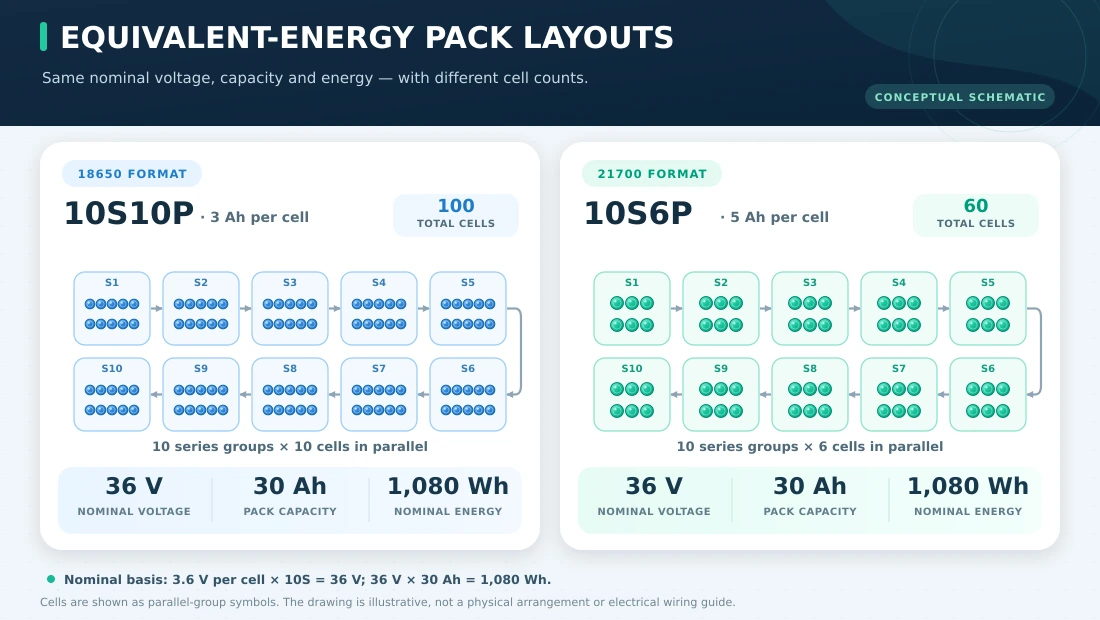
Figure 4. Equivalent nominal energy can be achieved with different cell counts and mechanical layouts; diagram is conceptual, not an assembly drawing.
| Application / priority | Potential starting point | What to validate |
|---|---|---|
| Compact or existing 18650 equipment | 18650 | Exact model compatibility, dimensions, voltage window and current limits |
| E-bikes and light mobility | Evaluate both; 21700 can reduce cell count | Energy target, sustained current, thermal management and enclosure geometry |
| Power tools and high-current equipment | High-power models in either format | Continuous/pulse current, voltage sag, temperature and cell matching |
| Portable power and battery backup | Often worth screening 21700 | Energy per module, cycle duty, pack cost, cooling and certification |
| Legacy pack replacement | Use the originally qualified format | Part number/revision, BMS settings, connector and mechanical safety |
For a new OEM design, a simple decision order is useful: (1) confirm space and voltage, (2) calculate usable energy, (3) validate continuous and peak current, (4) check thermal and cycle performance, and (5) compare total delivered pack cost. The format that passes all five checks is the stronger candidate for that project.
Important: Do not mix different cell formats, manufacturers, grades, capacities or aged and new cells within the same pack without an engineered, validated design. Manufacturer datasheets, application testing and safety requirements always take precedence over general comparisons.
The principal difference is the physical format: approximately 18 × 65 mm for an 18650 cell versus 21 × 70 mm for a 21700 cell. The larger 21700 body can accommodate more active material, but capacity and power remain model-specific.
Not necessarily. Some high-power 21700 models deliver very high current, but many 21700 models prioritize energy instead. Compare datasheet-rated continuous current, pulse current, resistance, temperature limits and voltage sag for the exact models.
Many 21700 cells have more Ah and Wh per cell. For example, a 5.0 Ah, 3.6 V 21700 stores 18.0 Wh nominally, compared with 10.8 Wh for a 3.0 Ah, 3.6 V 18650. This is an illustrative comparison, not a fixed ratio between the formats.
They are not physically interchangeable in standard holders. Moving to 21700 generally requires a redesigned enclosure, cell spacing and interconnections. The BMS, allowable current, charging profile and thermal design must also be revalidated.
There is no fixed price winner. Compare the same grade and commercial conditions, then calculate price per nominal Wh and total battery pack cost. A cell with a higher per-piece price can still be economical if it delivers more usable energy or reduces assembly complexity.
A 21700 format is often attractive for a new e-bike battery design because it may meet the energy target with fewer cells. Whether it is better depends on frame space, power demand, weight, BMS limits, cell availability and pack price.
Many conventional lithium-ion models in both sizes have similar charge-voltage limits, but the format name does not define chemistry or voltage. Always follow the exact manufacturer's charging specification and qualified pack design.
Share the desired format or model, voltage, capacity, continuous and peak discharge requirements, expected quantity, application, destination and document requirements. If the cell model is open, include the pack dimensions and energy target so suitable alternatives can be evaluated.
Compare available models, capacity, discharge performance and technical specifications for your OEM application. Explore our 18650 and 21700 battery cell ranges, or send your specifications to MisenBattery for a model-by-model evaluation.
18650 Battery Cells Compare compact cylindrical cell models for portable equipment, power tools and custom packs. | 21700 Battery Cells Compare higher-capacity and high-drain options for e-mobility, industrial and OEM projects. |
Need assistance with an OEM battery project? Tell us your required voltage, Ah/Wh, operating current, target dimensions, order volume and delivery country. Contact MisenBattery;
Molicel INR-21700-P50B Product Data Sheet, Version 1.1 (illustration of model-specific capacity, discharge-current and temperature conditions).
Editorial note: Dimension calculations, cost examples and the 10S10P/10S6P pack comparison are simplified engineering illustrations, not qualification data, sales prices or guaranteed product performance. Manufacturer specifications for the exact cell model, operating conditions, test results and qualified pack design always take priority.
